
A reader reports that a recommendation in an older article no longer works. The writer has moved on, the article has been shared in several places, and nobody is sure whether the problem is an error, a change in circumstances, or a misunderstanding.
A post-publication process gives that report somewhere to go. It identifies who assesses the issue, what evidence is needed, who can authorize a change, and how readers will learn what changed. It also connects the article to the excerpts and scheduled materials that may repeat the same claim.
The process can be simple enough for one person to maintain. Its purpose is to make decisions traceable and proportionate to their consequences, not to create a new approval chain for every typo.
Give published articles an owner and a route for reports
Before an issue arrives, decide who receives reports and who has authority to resolve them. In a small publication, the same person may receive the message, investigate it, and publish the change. A larger team may divide those tasks, but one person should remain responsible for moving each report to a decision.
Offer a recognizable way for readers to report a problem. A contact form or monitored editorial email can work if the publication has the capacity to use it. Ask for the article URL, the passage in question, an explanation of the concern, and supporting material where available. Do not require a reader to supply evidence before the team will consider a potentially serious problem.
Record the report even when it arrives through a different route, such as a reply to a newsletter. Note the date received, the relevant passage, any evidence supplied, and the person responsible for the next step. Keep personal information to what is needed to handle the report, and avoid placing a reader’s private details in a public correction.
This maintenance responsibility should connect to the wider editorial workflow from idea to publication. Publication changes the work from production to upkeep; it does not remove the need for an owner.
Assess the report before choosing a response
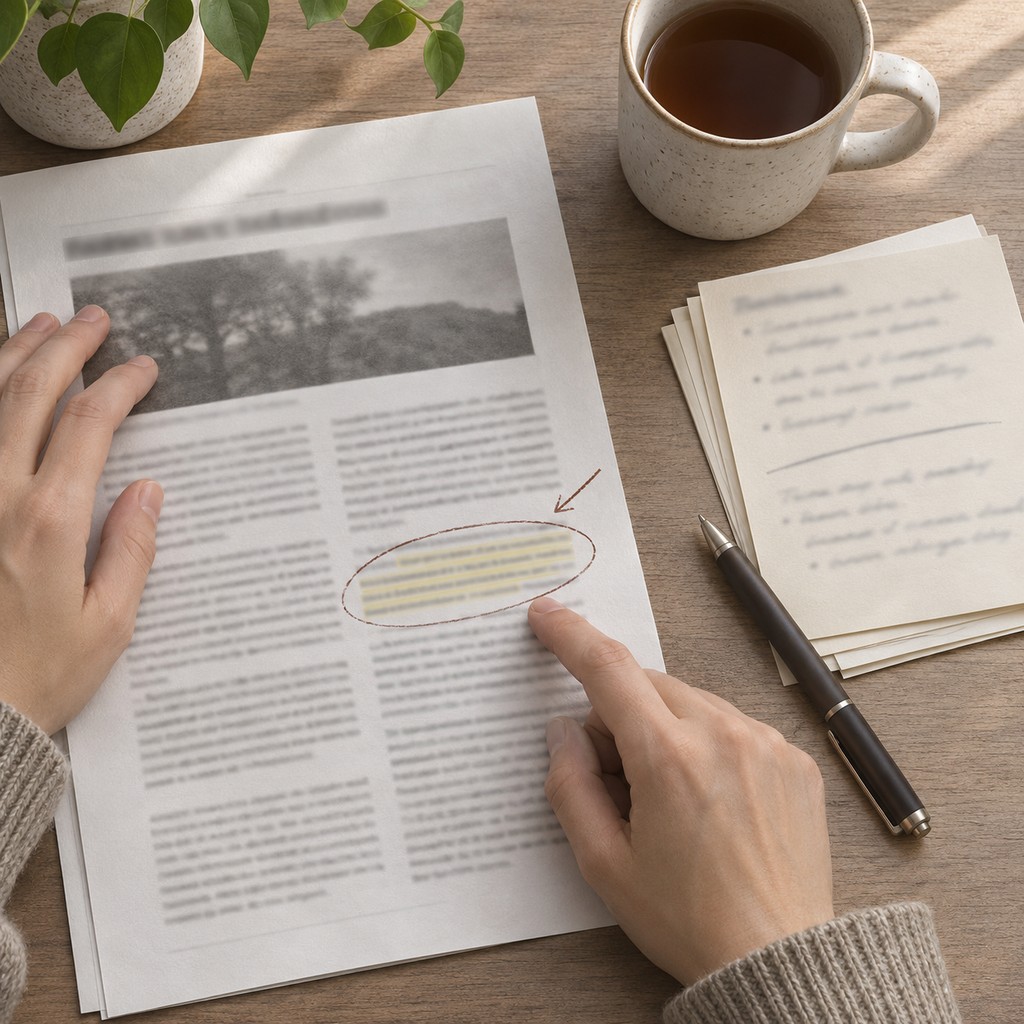
A report is a reason to investigate, not automatic proof that a statement is wrong. Locate the exact passage and establish what it told a reader at the time. Then compare it with the original source and any relevant new evidence. A source may have changed, the article may have summarized it incorrectly, or the reader may have encountered an ambiguous sentence.
Consider three questions together:
- Potential consequence: Could the passage lead someone to make a consequential decision, identify the wrong person, or misunderstand the article’s central recommendation?
- Evidence: Is the problem confirmed, plausible but unresolved, or contradicted by reliable evidence?
- Reach and persistence: Does the claim appear only in the article, or also in a headline, image, newsletter, scheduled post, or other version?
Use those questions to set the next action and its urgency. A potentially harmful instruction deserves immediate attention even if verification is incomplete. A minor spelling issue can usually follow a routine maintenance route. The exact response times should reflect the publication’s risk and capacity; a deadline on paper is useful only if someone can act on it.
If a material claim cannot be verified quickly and leaving it unchanged could mislead readers, consider a temporary, clearly worded notice or pausing relevant scheduled distribution while investigation continues. State what is under review without presenting an unverified allegation as fact. Record who will investigate, when the team expects its next decision, and what happens if the evidence remains unavailable. The planned guide to triaging reader reports of article errors addresses that assessment in more detail.
Choose the kind of change
The reason for a change matters as much as the amount of text edited. These distinctions are a practical starting point; a publication should define its own labels consistently.
| Change | When it fits | Reader-facing treatment to consider |
|---|---|---|
| Correction | A published statement was materially inaccurate when presented. | Fix the passage and explain the error and correction. |
| Clarification | The underlying information was supportable, but wording or context could reasonably mislead. | Revise the explanation and identify the clarification when it changes how readers understand the piece. |
| Update | New information or changed circumstances make a previously accurate passage incomplete or outdated. | Add the current information and explain its timing and relevance. |
| Routine edit | A change improves spelling, formatting, or wording without changing meaning. | Make the edit under the publication’s normal policy; a prominent note is not necessarily useful. |
A single revision can involve more than one category. For example, an article may have misstated an original policy and the policy may also have changed since publication. Explain both facts instead of calling the whole change an update and obscuring the original error.
The Society of Professional Journalists’ ethics code recommends acknowledging mistakes, correcting them promptly and prominently, and explaining corrections clearly. It is a journalism ethics resource rather than a universal operating rule for every publisher, but its emphasis on visible accountability is useful when deciding how to communicate a material change. The planned guide to labeling article changes develops the distinctions further.
Verify the change and make the decision traceable
Assign someone to locate the strongest available evidence for the affected claim. For a platform instruction, that may be current official documentation; for a quotation, it may be the original recording or transcript. Check that the source supports the specific statement, its date, and its scope. If the evidence supports only part of the original claim, narrow the claim rather than preserve certainty the source cannot justify.
Keep a short internal change record alongside the article or in an accessible editorial system. A useful record contains:
- the article URL or stable content identifier and the affected passage;
- the report’s arrival date and source, with private details stored appropriately;
- the evidence considered and any unresolved uncertainty;
- the decision, its rationale, and the person who authorized it;
- the old and revised wording, or a link to an accessible version history;
- the publication date of the change, the reader-facing note, and any follow-up actions.
A version history can help, but do not assume the publishing tool preserves every field or external asset. If it does not provide a usable record, keep the relevant before-and-after wording in the change record. Preserve only information the team has a legitimate reason to retain, consistent with its own privacy arrangements.
When the issue remains disputed, record what was checked and why the team could not establish the claim. Depending on the consequences, the next decision may be to seek further evidence, revise the wording to reflect uncertainty, remove the unsupported claim, or leave the article unchanged with an explanation to the reporter. Escalate legal, safety, or other specialist questions to an appropriate qualified person when needed; an editor should not invent certainty to close a ticket.
Publish the fix and explain what readers need to know
Correct the affected passage itself. A note alone may leave readers with the wrong instruction in the main text. Then add a notice that identifies the substantive change in plain language: what was wrong or incomplete, what is now correct, and when the change was made. Place a consequential notice where readers are likely to encounter it, such as near the beginning or affected passage, according to the publication’s policy and the nature of the error.
For a hypothetical article that incorrectly named a publication setting, a useful notice might read:
Correction, 19 November 2026: An earlier version named the wrong setting for the example. The article now identifies the setting as “Archive” rather than “Publish.”
This is an illustration, not a claim about an actual platform. In a real correction, verify the names and replace the example date with the date the correction was published. Do not repeat sensitive or harmful details unnecessarily, but give enough context for a reader who saw the original to understand the correction.
An update note serves a different purpose. It might say that a guide was revised to reflect a documented change that occurred after the original article appeared, naming the affected guidance and date. Avoid using a new date alone as a substitute for an explanation of a material revision. Likewise, do not describe a factual correction as a routine refresh.
A publication date and an update date can answer different reader questions: when the article first appeared and when a substantive revision occurred. Use dates consistently and explain significant changes; a fresh-looking date should not suggest that every claim was newly researched if the work was limited to one section.
Follow the change beyond the article
An article may have created a newsletter excerpt, social post, graphic, syndication copy, or scheduled adaptation. The article correction is the starting point for checking those dependent versions. Use the distribution record to identify what repeated the affected claim and who controls each copy.
For each version, decide whether the misleading material is still accessible or scheduled, how consequential it is, and whether the channel permits an edit or an accompanying correction. Update editable scheduled material before it goes out. Where a published item can be corrected, make the correction visible in a way that fits the channel. If a sent email or third-party copy cannot be changed directly, consider an appropriate follow-up or contact the party responsible for that copy. Do not promise that every recipient will see it.
Record the action, the destination, and any limitations. A publisher might correct its own article and send a correction to a syndication partner, while noting that the partner’s copy remains outside its direct control. For the production side of these connected versions, see how to adapt one article for different distribution channels. The planned guide to keeping distributed content consistent after a correction covers follow-through in greater depth.
Work through a hypothetical report
Suppose a reader points out that an article tells editors to use a particular platform feature, but the linked documentation no longer describes that feature in the same way. The publication’s editor records the URL, the passage, the report date, and the reader’s evidence. Because the instruction is central to the article’s method, the editor pauses a scheduled excerpt that repeats it while checking the current official documentation.
The investigation finds that the article accurately described the feature when published, but the feature has since changed. The editor revises the steps, cites the current documentation, and adds an update note explaining which instructions changed and when. The scheduled excerpt is revised before release. A previously sent newsletter cannot be edited, so the editor records that limitation and decides whether a follow-up is proportionate to the risk of readers relying on the old instruction.
Had the original article misread the documentation, the response would instead include a correction identifying that error. If the documentation were unclear, the editor could avoid claiming a definitive workflow, explain the uncertainty, and keep the investigation open. The same incoming report can therefore lead to different outcomes depending on the evidence.
Build maintenance into available capacity
Not every article needs the same review rhythm. Assign a future review point where information is likely to change or where an error would have a meaningful consequence. For more stable pieces, a report or a change to a linked source may be a better trigger than a frequent calendar reminder. Record the trigger and owner so the task survives a change in staffing or priorities.
Reserve some editorial capacity for reports and necessary updates alongside new production. If a team cannot maintain every proposed article, that constraint should inform what it publishes and distributes. A small publication might keep one shared change log and handle routine edits during a regular maintenance session, while interrupting that rhythm for an urgent issue.
Periodically look across resolved reports for patterns: a source that was repeatedly misunderstood, an unclear handoff, or an adaptation process that detached a condition from the original advice. A recurring problem may call for a better brief, source note, or distribution record rather than another individual fix. Count reports as signals for investigation, not as a complete measure of accuracy or reader trust.
A workable correction system closes the loop: the reader can report a problem, the publication can explain its decision, and the next editor can understand what happened without reconstructing the entire history. Its scale can change with the team, but responsibility for the published information should remain clear.