
A publication can have plenty of useful articles and still leave readers unsure where to begin. One proposed solution is a topic hub: a destination that gathers the material into a deliberate route. But if readers simply want recent coverage of a familiar subject, that extra structure may create work without solving a meaningful problem.
Choose a category page when readers need a dependable collection to browse. Choose a topic hub when they need help understanding, selecting or sequencing the material. Use both category pages or topic hub when those tasks are distinct and the team can maintain their relationship.
The decision depends on what the destination must do, rather than how substantial its layout looks. The framework below is an editorial planning method, with hypothetical examples you can adapt to your publication.
Separate collecting content from guiding a reader
For this comparison, a category page means a collection organized around a recurring editorial subject. A topic hub means a curated destination that explains a subject’s scope and provides deliberate routes through selected material. These are working definitions; a publication can combine both functions on one page.
A category page answers a browsing question: “What does this publication have on this subject?” Its value comes from a clear boundary, relevant entries and a usable way to explore them. Recent coverage may be the most useful starting point, although the collection does not have to rely entirely on publication order.
A topic hub answers an orientation question: “Where should I start, and which material addresses my situation?” Its editor selects and groups resources, explains their relationships and makes useful starting points visible. The hub needs an organizing idea beyond gathering everything with a shared label.
Neither function requires a particular visual treatment. A collection with a short introduction and well-chosen groups may provide enough guidance. A large page filled with article cards may still leave readers to work out every relationship themselves.
The broader method for designing website navigation around reader tasks starts with the destination readers need. This narrower decision concerns how that destination should organize its material.
| Decision area | Category page | Topic hub |
|---|---|---|
| Main reader task | Browse coverage within a recognizable subject | Find a starting point or route through a subject |
| Inclusion principle | Belongs within the category’s editorial scope | Contributes to the hub’s stated reader task |
| Ordering | A consistent browsing order, potentially with selected features | Deliberate groups, priorities or sequences |
| Editorial explanation | Enough to clarify the collection | Enough to explain choices and relationships |
| Maintenance focus | Relevant classification and useful presentation | Selection, descriptions, routes and underlying resources |
Keep a category page when browsing is enough
A category page is a reasonable choice when the subject label communicates a useful boundary and readers can judge individual entries from their titles and summaries. They may already understand the subject and want to see what the publication has covered recently.
Consider a hypothetical publication covering changes in digital publishing. A regular reader visits its Distribution section to browse new analysis. That reader does not necessarily need an introductory pathway through distribution strategy every time. A clear collection may serve the visit well.
Before commissioning a separate hub, examine whether a modest improvement would resolve the actual difficulty. A vague category description may need a clearer scope statement. Indistinguishable article cards may need better summaries. A useful introductory guide may need a prominent link above the continuing coverage.
Those changes add direction without necessarily creating another destination. They also keep the maintenance commitment smaller, provided the collection remains understandable.
Library size alone does not settle the choice. A large collection can remain useful for browsing when its boundaries are clear. A small collection can require guidance when the articles address different stages of a complicated task. Ask what readers must interpret, rather than setting an article-count threshold.
Build a topic hub when readers need a route
A topic hub earns its place when the relationship between resources is part of the answer. Readers need help choosing among explanations, distinguishing introductory material from specialist guidance, or identifying which step applies to their situation.
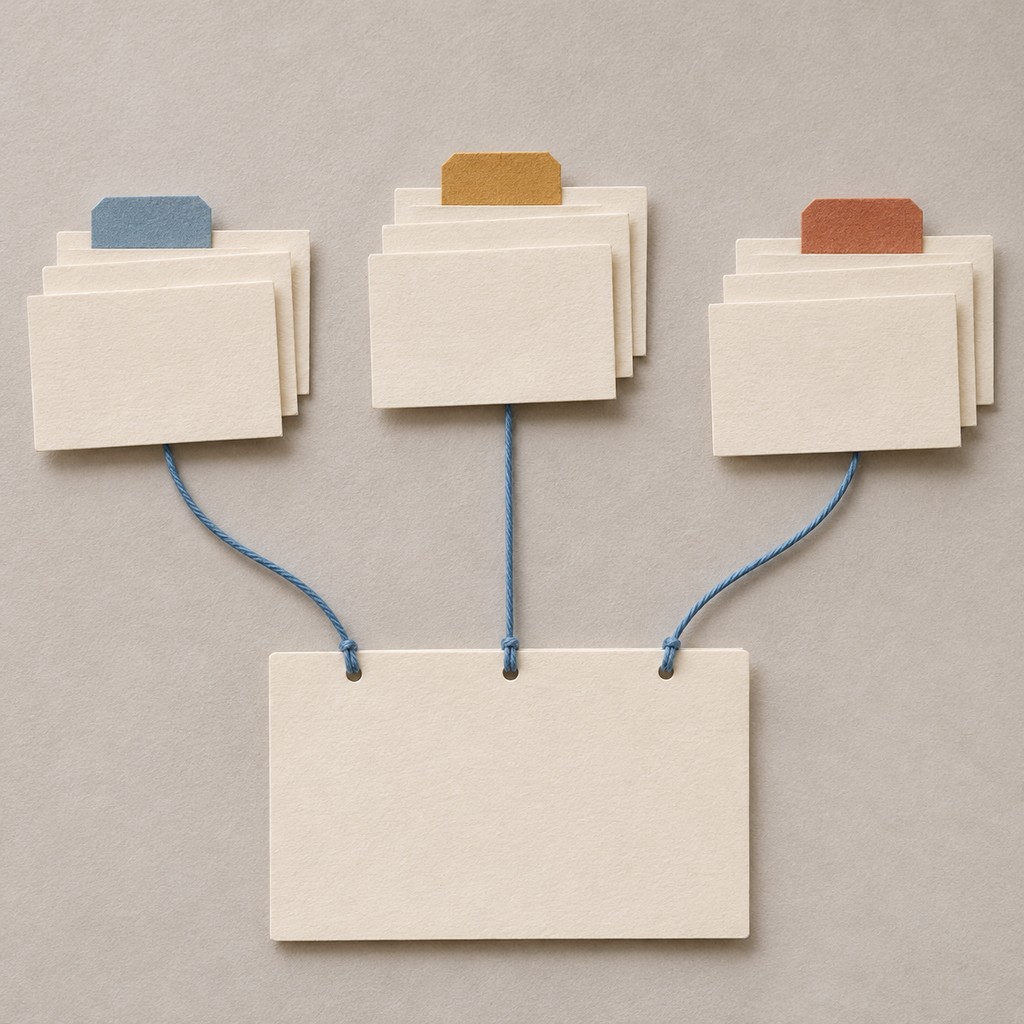
Imagine a hypothetical collection about starting a publication newsletter. It contains articles on defining the newsletter’s promise, selecting material, choosing a cadence and planning a welcome email. A list of titles exposes the resources. A curated destination can also explain which decisions depend on earlier choices and which resources can be used independently.
The hub might offer routes such as:
- Define the publication: clarify whom the newsletter serves and what readers should expect.
- Plan an issue: select material and establish a coherent editorial package.
- Sustain delivery: choose a cadence the team can support.
- Welcome subscribers: explain what happens after someone joins.
These are illustrative groupings, not proposed changes to this site’s architecture. Their purpose is to show the additional editorial work a hub performs.
Each group needs a short explanation of who it helps and what the linked material contributes. “Read more” repeated beneath several cards provides little assistance with selection. A description such as “Use this guide when you have a newsletter concept but have not decided what belongs in each issue” makes the route more explicit.
A hub should still leave detailed answers to the linked articles. If it reproduces those guides, it becomes another resource requiring the same substantive updates. Use the approach in defining topic ownership across a content library to establish what the hub explains fully, what it summarizes and where it hands readers onward.
Use both when they make different promises
A category and a hub can coexist when one supports continuing coverage and the other supports orientation. The same article can appear in both because the surrounding context serves a different purpose.
For example, a hypothetical publishing publication could have a broad Digital Publishing category and a focused collection helping readers plan a platform migration. The category gathers coverage across the section. The hub selects resources relevant to a particular undertaking and explains how they fit together.
The relationship should be visible. The category can introduce the focused collection where relevant. The hub can offer a route to wider coverage without making that broader archive a required step.
Two destinations need more justification when they have almost identical titles, introductions and article selections. If an editor cannot explain their different reader tasks in a sentence, improving one destination may be the more manageable choice.
A combined page is another option. It might place a concise starting guide above a continuing article collection. This can serve readers who need orientation and those who want to browse, as long as the two areas remain understandable. There is no requirement to create a separate URL for every useful organizing function.
Budget for the editorial layer you add
A hub creates maintenance work beyond checking whether its links still open. Its selection can become unbalanced, its descriptions can stop matching the destination articles, and its recommended route can become confusing after coverage changes.
Before building it, specify who owns the collection, what changes should trigger attention and where that work fits alongside new assignments. Keep the arrangement proportional to the team. A small publication may need a short ownership note and a reminder attached to relevant article updates.
Useful maintenance triggers include a linked article changing scope, a new resource filling an important gap, a recommendation becoming outdated or reader feedback revealing an unclear route. The owner should consider what the change means for the collection, rather than automatically adding every new article.
Be selective about summaries. A brief description explaining a resource’s role is usually easier to maintain than a long synopsis containing details repeated from the article. Likewise, a hub promising “the latest” material creates a different upkeep obligation from a stable introduction to a subject.
If the existing articles themselves need substantial attention, adding a hub will not complete those answers. The framework for reviewing whether to refresh, merge or retire existing content addresses that separate maintenance decision.
Choose the smallest destination that completes the task
Start with a concrete reader situation and inspect the material available to serve it. Then describe the proposed destination in one sentence: “This page helps this reader choose or find this material so they can take this next step.”
If the job is browsing a recognizable subject, improve the category page. If the job requires selection, explanation or sequencing across several resources, outline a hub. If one existing article already answers the question, direct readers there rather than building a collection around it.
Before expanding the design, sketch the essential content: the opening explanation, any groups, the selected resources and the reason for each link. A sketch that consists only of the same article list in a different arrangement needs a clearer organizing purpose.
Use reader evidence where available. Ask someone facing the intended task to explain where they would begin and why. Record unclear choices and missing explanations. A brief observation can reveal a problem worth investigating; it does not establish how the entire audience behaves.
The practical commitment is the deciding constraint. Build the destination whose promise the publication can fulfill with its current coverage and maintain with its available capacity. Add another layer when it gives readers a clearer route through the material.