
A series can start with a strong idea and still lose its direction halfway through. The opening article establishes a problem, the next two explore interesting side questions, and the final installment never quite arrives. Each piece may be useful, but the collection has no clear point of completion.
To plan an editorial series, define the reader outcome and the finish condition together. Then divide the work into installments that contribute something distinct, arrange them into a usable reading path, and reserve enough capacity to deliver the ending.
The approach below is an editorial planning framework, not a universal formula. It suits a finite series: a collection commissioned to fulfill a bounded promise. An ongoing column can have a consistent purpose without needing the same kind of endpoint.
Define the change the series should make possible
Begin with the reader’s starting situation and the decision or understanding the series should support. A topic names the territory; an outcome explains why readers would travel through it.
“An editorial series about research” leaves the assignment open. “Help a small publishing team turn an uncertain article idea into a research plan it can execute” establishes a more useful direction. It suggests a starting difficulty, a practical destination and limits on what belongs.
Write the promise in one sentence:
For readers facing [situation], this series will explain [bounded subject] so they can [decision or action], within [important limits].
For a hypothetical publication serving small editorial teams, that might become:
For teams that begin drafting before they know what evidence they need, this series will explain how to frame a research question, select sources and organize findings so they can prepare a workable article research plan.
The promise should describe something editorial work can provide. Explaining how to make a research plan is within scope. Guaranteeing faster production or better audience growth would depend on conditions the series cannot control.
Record the basis for the proposed need. It may come from documented reader questions, gaps in existing coverage or an initial editorial hypothesis. Keep those categories distinct rather than treating an attractive idea as demonstrated demand.
Write the ending before filling the calendar
Define what would make the collection complete before deciding how many articles it contains. Otherwise, an available publishing slot can become a reason to commission another installment.
For the hypothetical research series, a finish condition could be: the collection has explained how to define the question, identify suitable evidence, organize findings and decide whether the material is ready for drafting. The final piece brings those decisions together in a worked research plan.
This creates a boundary. Interview technique, archive research and managing a research budget might be useful subjects, but they do not automatically belong in this particular series.
Separate three kinds of completion:
- Reader completion: the collection provides the explanations needed to fulfill its stated promise.
- Production completion: the agreed installments and supporting materials have been delivered.
- Operational closure: the team has assigned maintenance responsibilities and recorded what to do with unresolved ideas.
Publishing every planned article establishes production completion. It does not, by itself, establish that the reader promise has been fulfilled. Equally, a completed series can remain available and maintained without continuing to publish new installments.
Write an explicit exclusion alongside the finish condition. For example: “This series covers planning research for explanatory articles; it does not teach investigative reporting methods.” An exclusion makes later scope decisions easier to explain.
Decide whether separate installments earn their place
Before committing to a series, test whether the subject actually benefits from being divided. A long outline is not sufficient reason to create multiple pages.
Separate installments are useful when they answer distinct reader questions, require meaningfully different treatment or support tasks readers may undertake at different times. A single article may be clearer when every section is needed to answer one compact question.
Consider the cost of separation. Each page needs enough context to make sense, its own editing and distribution work, and a way for readers to find the rest. Splitting a tightly connected explanation can leave readers moving between pages to reconstruct one answer.
For a hypothetical guide to preparing an article research plan, the initial proposal might contain six pieces. On inspection, “listing possible sources” and “choosing which sources to use” may work better as one comparison article. The collection becomes smaller because the distinction did not justify a separate reading task.
Use the companion guide, When Does a Topic Need a Series Instead of One Long Article?, for the narrower decision about format. At the planning stage, the essential question is whether each proposed installment has a useful reason to exist independently.
Give each installment one primary job
Build an installment map before turning the proposal into assignments. Each entry should identify the reader question, its contribution to the series outcome and the boundary between it and neighboring pieces.
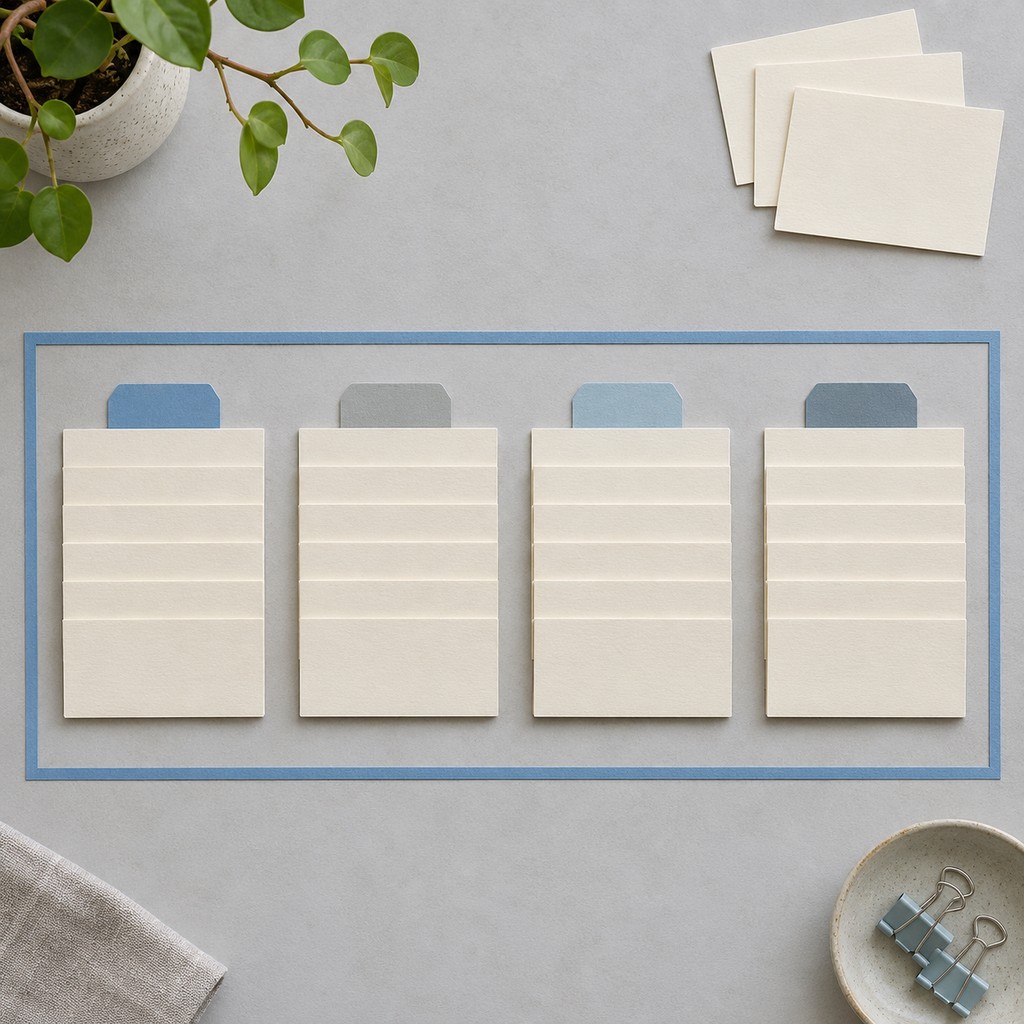
The following map is hypothetical. Its four installments illustrate a possible division of work, not a recommended article count.
| Installment function | Reader question | Distinct contribution | Boundary |
|---|---|---|---|
| Frame the problem | What does this article need to establish? | Turn an idea into answerable research questions | Does not catalog every source type |
| Select evidence | Which sources fit those questions? | Compare evidence needs and source limitations | Does not teach every research method |
| Organize findings | How should material support the draft? | Connect findings to claims and unresolved gaps | Does not become a general note-taking guide |
| Bring the decisions together | Is the research plan workable? | Apply the preceding decisions in a complete example | Does not introduce an unrelated method |
Read the map across as well as down. If two pieces make the same contribution, merge them or sharpen their boundaries. If the ending requires a decision that no installment explains, address the gap before commissioning.
Assign a primary job without forcing every article into the same format. An opening explanation, a comparison and a worked example can belong to one series while using different structures.
Keep optional ideas in a separate backlog. Their relevance to the broad topic does not make them required installments. An additional piece should either repair a gap in the promise or justify a separate future commission.
Build a reading path with usable entry points
Choose a recommended sequence based on the reader’s developing understanding. Establish concepts before relying on them, and explain the criteria for a decision before presenting an example that applies those criteria.
Then examine each installment as a possible entry page. A reader arriving at the source-selection article should understand its immediate question without having to reconstruct the entire series.
Provide a short orientation where necessary: the situation the article addresses, any essential prerequisite and its relationship to the wider collection. Link to the earlier explanation when useful, while retaining enough context to answer the current question.
A dependency is justified when earlier knowledge is genuinely necessary. It is harder to justify when a page withholds the practical answer simply to send readers to another installment.
The opening article should establish the bounded promise and explain the proposed path. Middle installments should advance distinct questions. The ending should help readers assemble what the collection has taught them. These are functions, not mandatory labels or identical article templates.
For the detailed balance between progression and independent usefulness, see How to Sequence an Editorial Series Without Making Every Article Dependent.
Work backward from the hardest production constraint
Estimate the work needed across the whole collection before announcing a cadence. Include research, writing, editing, illustrations, publishing preparation and distribution. A schedule that accounts only for drafting leaves substantial work unassigned.
Identify the constraint most likely to affect completion. It could be one editor’s availability, access to a necessary source, or the time needed to build an accurate worked example. Plan around that condition rather than assuming every installment will require equal effort.
For each piece, record:
- the person responsible for moving it forward;
- the evidence or materials it depends on;
- the next handoff and who receives it;
- the intended publication window;
- what happens if a dependency is delayed.
One person can hold several responsibilities. The purpose is to make the work visible, not to create extra roles.
Production order can differ from publication order. If the final worked example reveals whether the framework holds together, outline or develop it early. That may expose missing explanations while the opening pieces are still easy to change.
Decide how much work must be ready before launch. A fully prepared collection offers more schedule certainty but delays the start. A rolling process leaves room to respond to early questions but requires capacity for later pieces. Choose according to the uncertainty and resources involved; there is no universal buffer.
Protect the ending when capacity tightens. Reducing optional examples or combining overlapping installments may preserve the promise more effectively than publishing the original opening and leaving the final synthesis unfinished. Any change to a publicly announced scope or schedule should be explained plainly.
Plan discovery and distribution alongside production
Decide how readers will recognize the collection and locate its parts. A series needs a coherent path through the material as well as a release schedule.
Use a stable overview location where the publication’s structure allows it. This might be a dedicated collection page or a section within the opening article. State the series purpose, show the recommended order and distinguish available installments from those still planned.
Give individual articles descriptive titles that communicate their immediate value. A series label can establish the relationship, but “Part Three” alone provides little guidance about the question that page answers.
For each release, define the distribution task: which reader situation the message should address, which available channel will carry it and who will prepare it. A comparison installment and a worked example may need different explanations of their value even when they serve the same series promise.
Avoid creating a new channel simply because the collection has several pieces. Distribution commitments should fit the publication’s existing audience relationships and available capacity.
After the final installment, update the overview and any temporary language about forthcoming pieces. The completed collection should remain understandable to someone who discovers it after the release period has ended.
Leave room for learning without making the scope endless
Specify which questions early reader responses could help resolve. They might reveal an unclear term, a missing example or a practical constraint the plan overlooked. That gives feedback a role without making every suggestion a new assignment.
Ask about the difficulty behind a request. A reader asking for another installment may need a clearer explanation inside an existing one. For a focused approach, use How to Ask Readers for Feedback That Can Inform Editorial Decisions.
Separate proposed changes into three groups: repairs needed to fulfill the current promise, useful improvements within scope and ideas for a different commission. This keeps necessary corrections visible without turning the series into an indefinite commitment.
Choose evidence that matches the learning question. Navigation records, where available, may help investigate whether people locate the next installment. Specific reader descriptions may help identify where an explanation is difficult to apply. Neither automatically establishes that the entire readership achieved the intended outcome.
Record what remains unknown. A small response set can inform a targeted revision without supporting a broad claim about audience demand or the success of the whole collection.
End by resolving the promise
Design the final installment to bring the reader to the destination established at the beginning. Depending on the subject, that could mean a worked decision, a synthesis of trade-offs or a practical plan assembled from the earlier explanations.
A recap can help readers navigate, but it should serve the final task. In the hypothetical research series, the closing piece would show how the question, source choices and unresolved gaps fit into one research plan. It would also explain the plan’s limits.
Keep editorial closure separate from maintenance. The collection can be complete while still needing corrections, refreshed references or clearer navigation. Assign responsibility for those tasks without treating maintenance as another season of publication.
If a worthwhile question remains, make a fresh decision about it. It may justify an extension, a later follow-up or no further work. The companion guide, How to Close an Editorial Series and Decide What Comes Next, develops that decision in more detail.
A compact working plan should now connect the reader promise, finish condition, installment map, production responsibilities, distribution approach and maintenance owner. The practical test is whether someone can explain what the series helps readers do—and why the planned final piece completes that job.